

27
October
2025


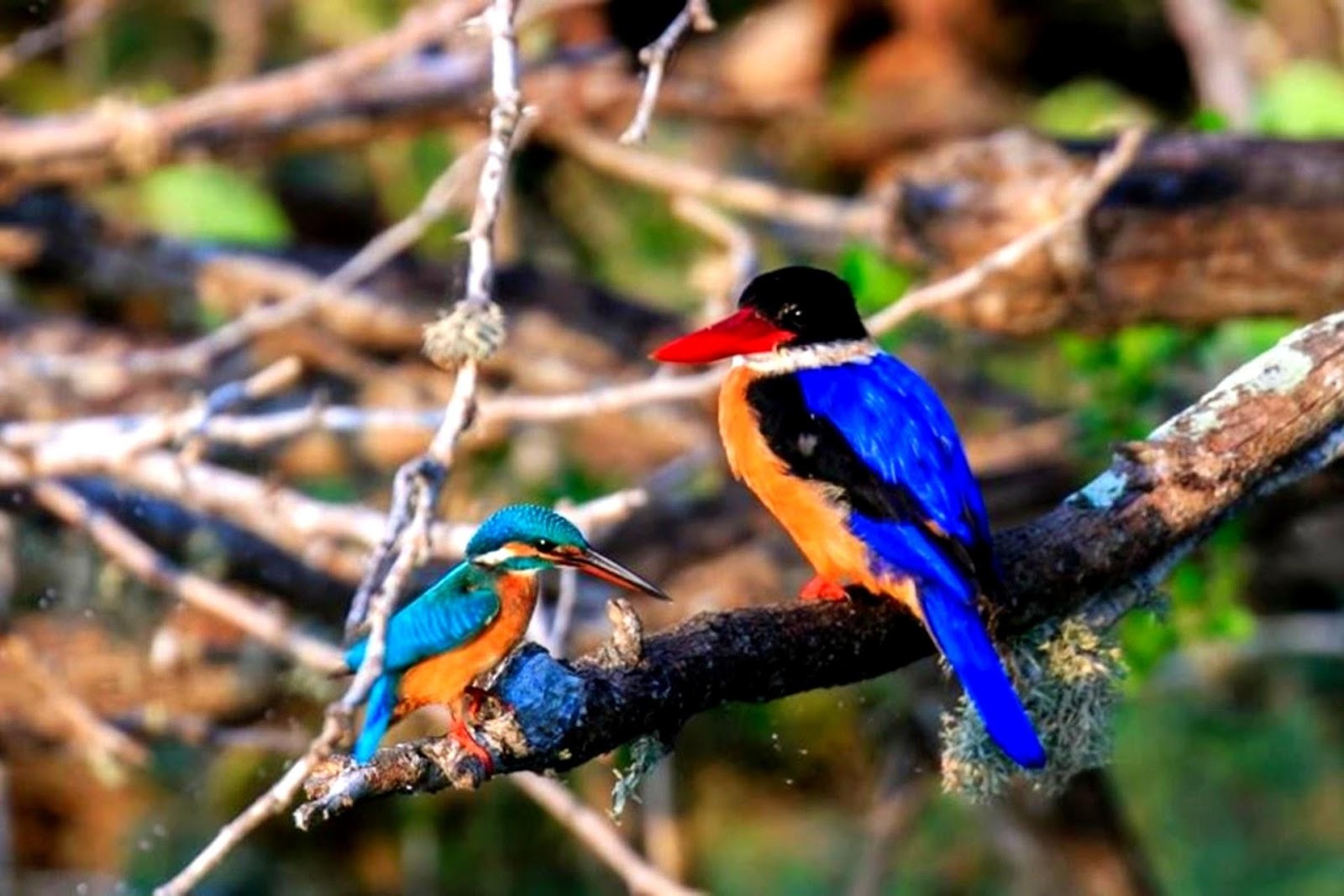
For passionate birdwatchers, Sri Lanka is nothing short of a birder’s paradise. This tropical island in the Indian Ocean shelters over 430 recorded bird species — including 33 endemics found nowhere else on Earth — and offers habitats ranging from rainforest and montane cloud forest to wetlands and coastal lagoons.
Whether you’re searching for the endemic Junglefowl, iridescent Kingfishers, migratory shorebirds, or forest specialists, Sri Lanka delivers in abundance. In this guide, Laksky Travels shares the island’s best birding sites, key endemic species, peak seasons, and tips for planning a customised birdwatching tour.
Each region presents unique birding encounters — from misty mountain trails to tropical rainforests and serene coastal lagoons.
Here are the most rewarding sanctuaries to include in your itinerary and what you can expect to observe:
A lush lowland rainforest in the Kelani Valley, Kitulgala is a haven for forest endemics. Birders can encounter the Sri Lanka Blue Magpie, Red-faced Malkoha, Green-billed Coucal, and Yellow-fronted Barbet. Along forest streams, look for Common Kingfisher, Black-capped Bulbul, and Chestnut-backed Owlet. At dusk, lucky observers may spot the elusive Serendib Scops Owl emerging from dense foliage.
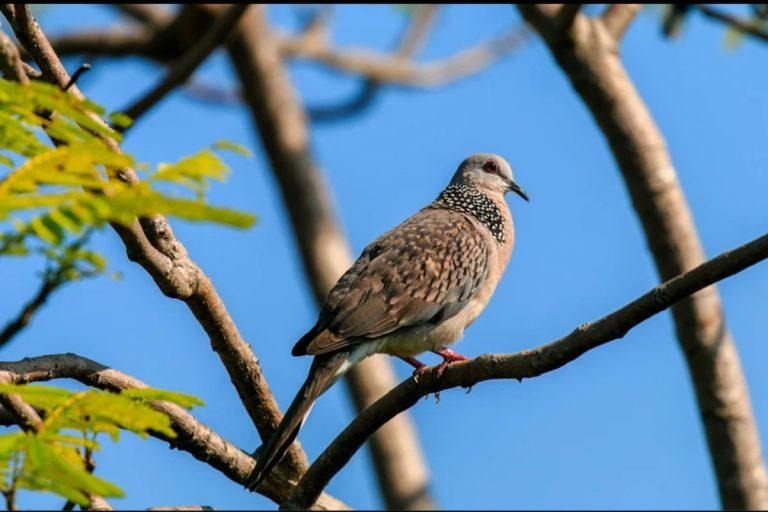
Birdwatching in Kitulgala rainforest – endemic Red-faced Malkoha and forest canopy trails.
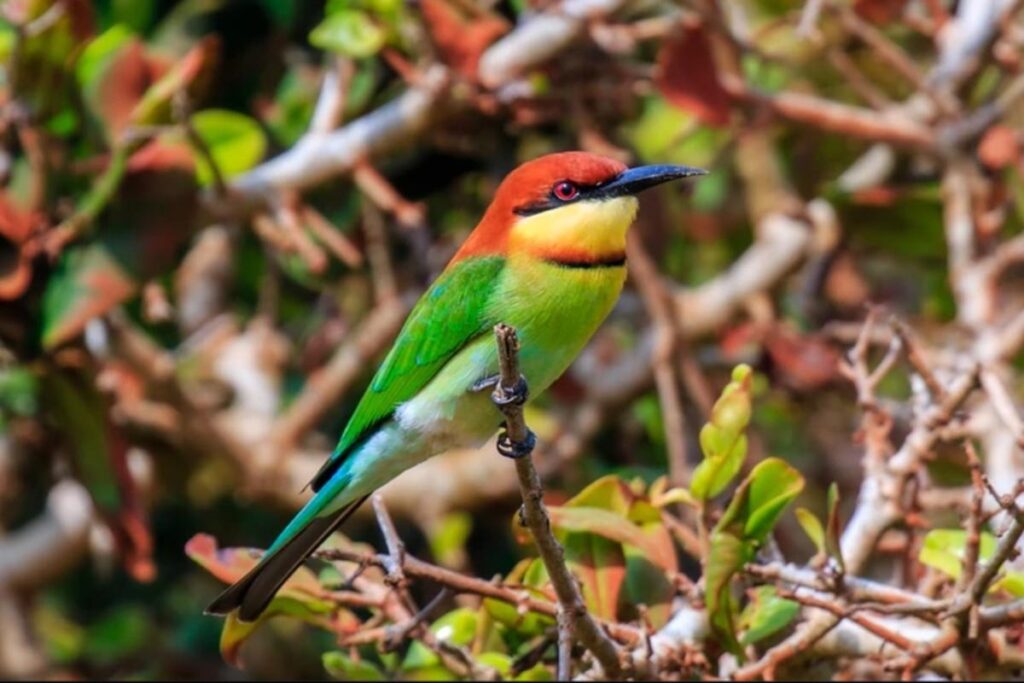
Once a royal retreat overlooking Kandy, Udawatte Kele is an easily accessible birding site featuring Layard’s Parakeet, Brown-capped Babbler, and Black-headed Cuckooshrike.
You might also hear the calls of White-rumped Shama or Emerald Dove, and morning walks often reveal Tickell’s Blue Flycatcher in shaded gullies.
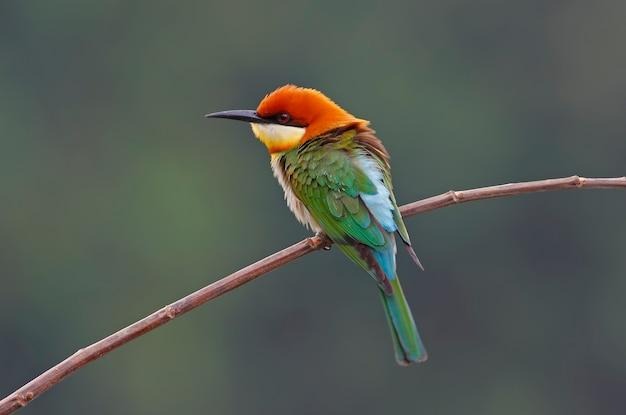
Chestnut-headed Bee-eater perched on a forest edge in Udawatte Kele Sanctuary — a colourful favourite among Sri Lankan birders (Merops leschenaulti).
At over 2,000 m elevation, the cool montane grasslands of Horton Plains host many highland endemics Sri Lanka Bush Warbler, Yellow-eared Bulbul, and the near-mythical Sri Lanka Whistling Thrush.
Keep an eye on the grassland edges for Pied Bush Chat and Hill Swallow, while Dull-blue Flycatcher and Great Tit occupy the canopy near Baker’s Falls.
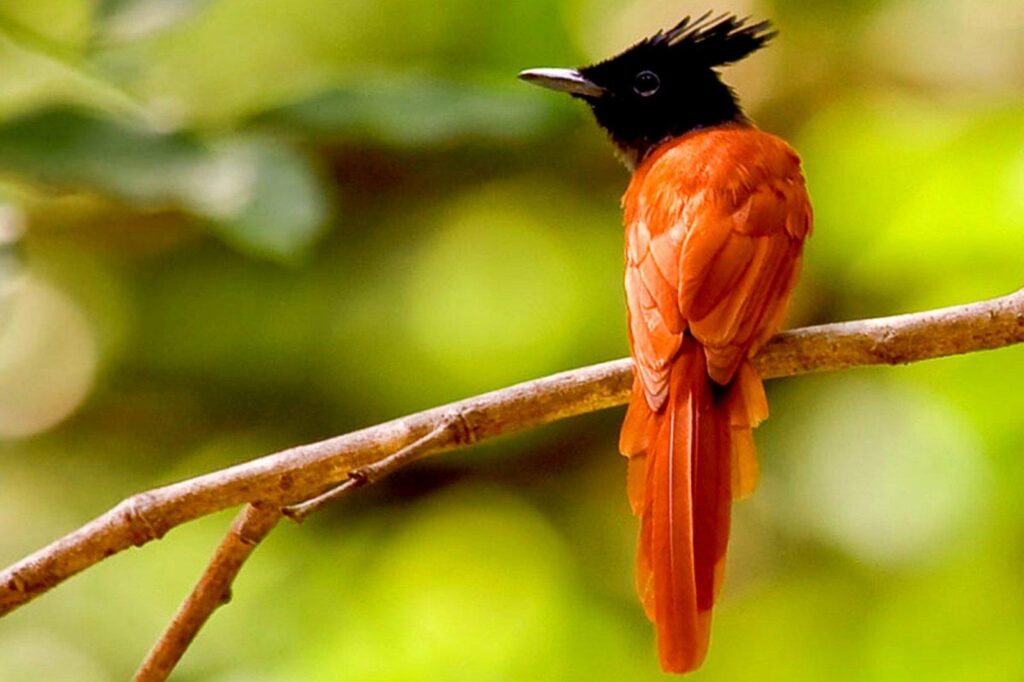
Sri Lanka Whistling Thrush and Dull-blue Flycatcher in misty highland grasslands.
Part of the vast southeastern coastal ecosystem, Kumana offers exceptional opportunities for observing large flocks of migratory and resident waterbirds.
Expect Painted Storks, Spot-billed Pelicans, Black-necked Ibis, Egrets, and Glossy Ibises.
Between November and April, you might encounter Garganey Ducks, Greenshanks, and Whimbrels — with the occasional, Black-crowned Night Heron roosting near lagoons.
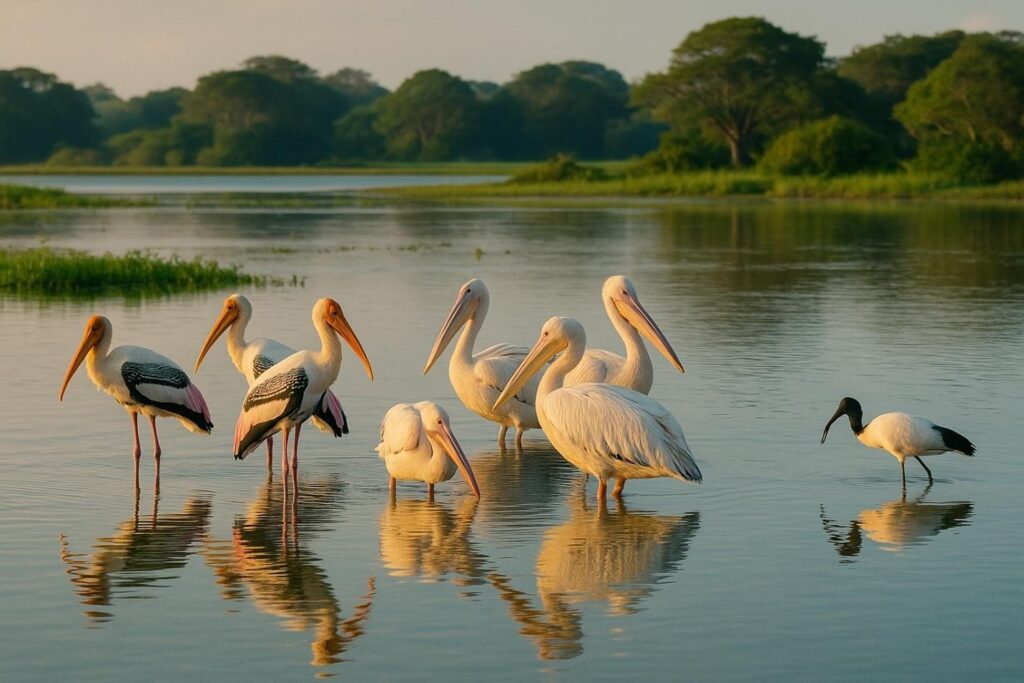
Wading birds at Kumana National Park — Pelicans, Storks, and Black-necked Ibis.
Sri Lanka’s first Ramsar-designated wetland, Bundala is famous for its Greater Flamingos that arrive in brilliant pink flocks from India each winter.
Other highlights include Curlew Sandpiper, Lesser Sand Plover, Painted Stork, and Eurasian Teal.
Dry scrub bordering the lagoons also supports Indian Peafowl and Yellow-wattled Lapwing.
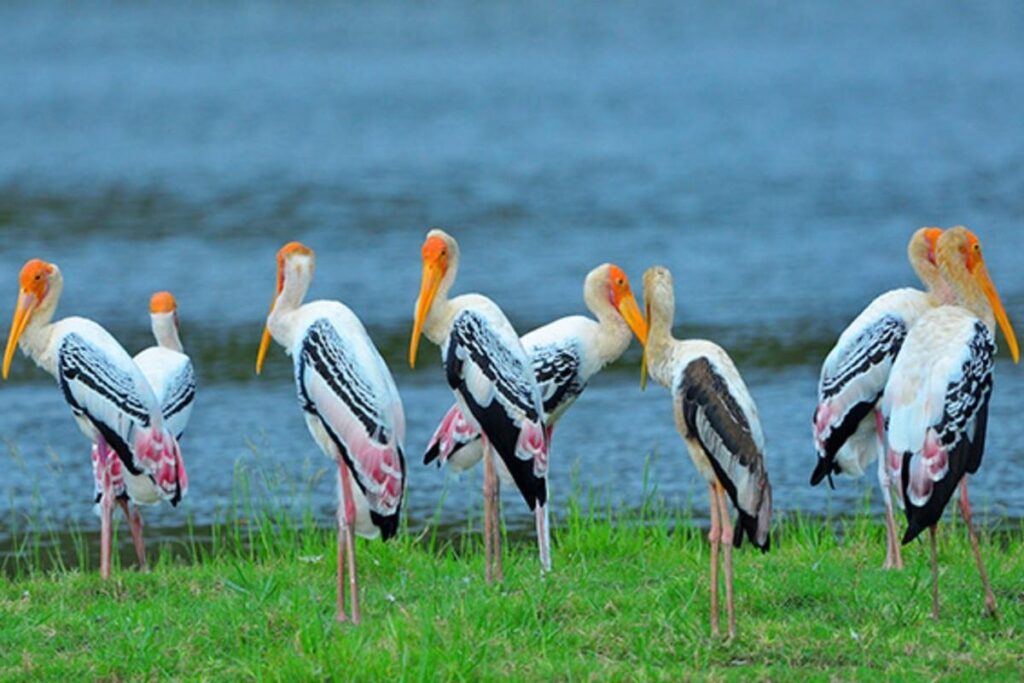
Migratory waterbirds in Bundala Ramsar wetlands — Greater Flamingos and Painted Storks.
A serene wetland and mangrove lagoon near Tangalle, Kalametiya provides sightings of Little Cormorant, Garganey, Purple Heron, Whiskered Tern, and Black-winged Stilt.
Resident species like White-breasted Waterhen and Common Kingfisher are often seen from small boats gliding along reed-lined waterways.
There are four nationally threatened birds found within the sanctuary – Indian Reef Heron, Glossy Ibis, Sri Lankan Jungle Fowl and Black-capped Purple Kingfisher, with Jungle Fowl being the only endemic species.
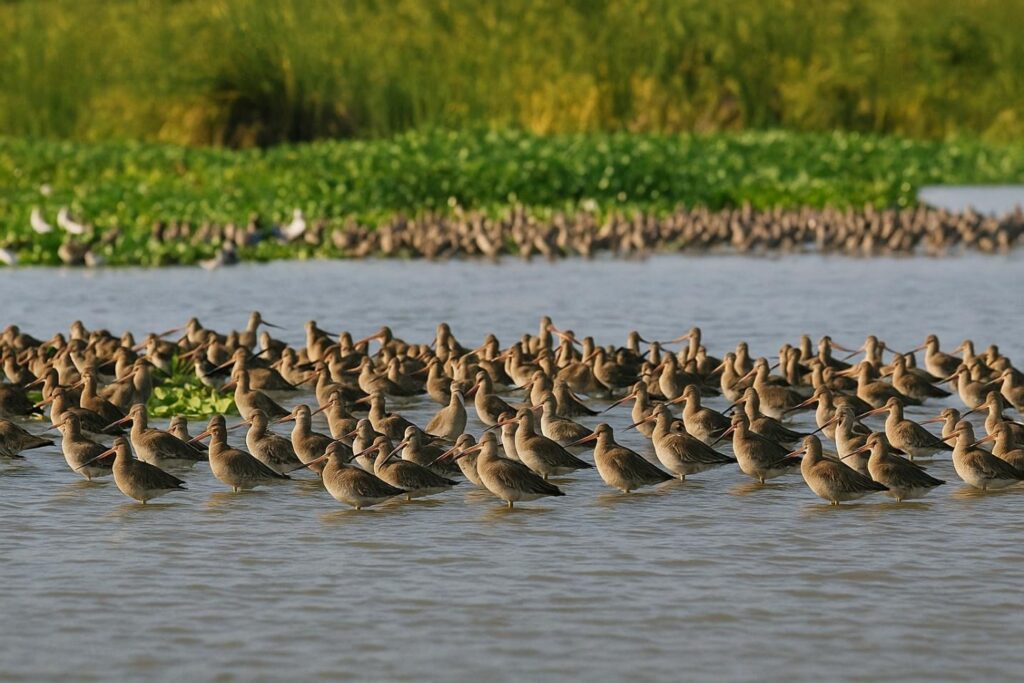
Birdwatching at Kalametiya coastal lagoon – ducks, cormorants, and herons.
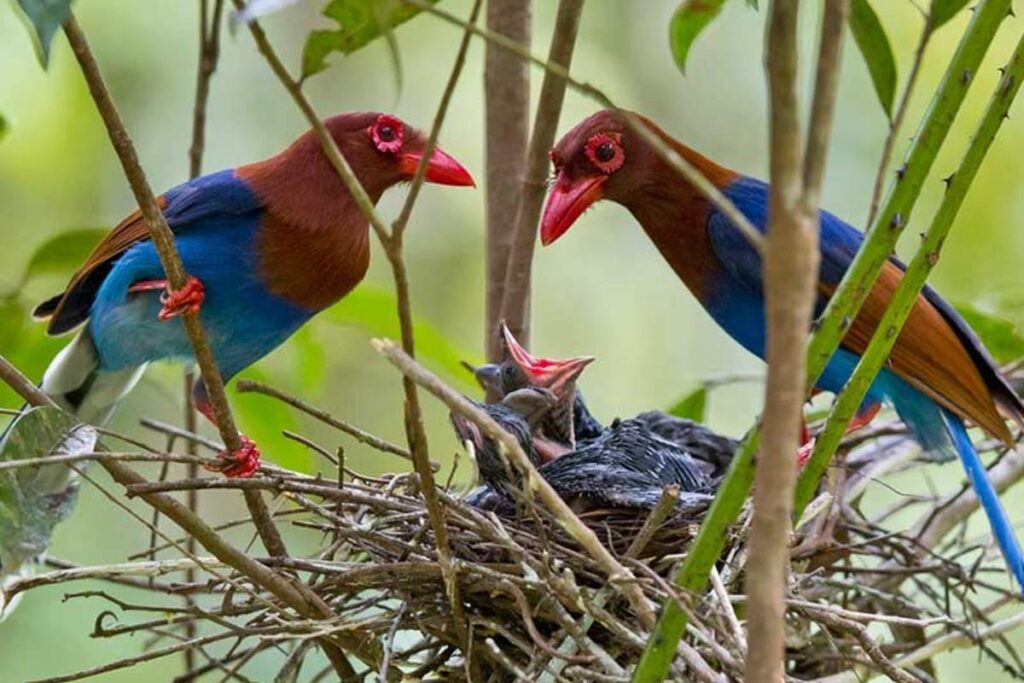
The jewel of Sri Lanka’s birdlife, Sinharaja harbours most of the island’s endemics, often seen in mixed flocks. 3 unique trails which giving different bird sighting experiences; Sinhagala, Yodamawatha and Kuda-wela. Expect to encounter Sri Lanka Blue Magpie, Orange-billed Babbler, Ashy-headed Laughingthrush, and Malabar Trogon.
Canopy watchers can add Scarlet Minivet and Black Bulbul, while photographers treasure sightings of Green-billed Coucal and Sri Lanka Spurfowl.
Sri Lanka Blue Magpie and endemic species in Sinharaja Rainforest.
Sri Lanka lies at the southern tip of the Asian migratory corridor, serving as the final resting point for millions of Arctic and Asian migrants.
Three primary flyways connect the island to the rest of the world:
From Europe, West Asia, and Siberia — following India’s western coast down to Mannar and Kalutara.
From East Asia, Mongolia, and Tibet — tracing the Bay of Bengal and India’s east coast to Kalmunai and Rameswaram.
From Southeast Asia across the Andaman Islands — connecting to Sri Lanka’s northeast coast.
Each October, vast flocks arrive; by April or May, they depart northwards in dazzling formations over Jaffna and Kalpitiya.
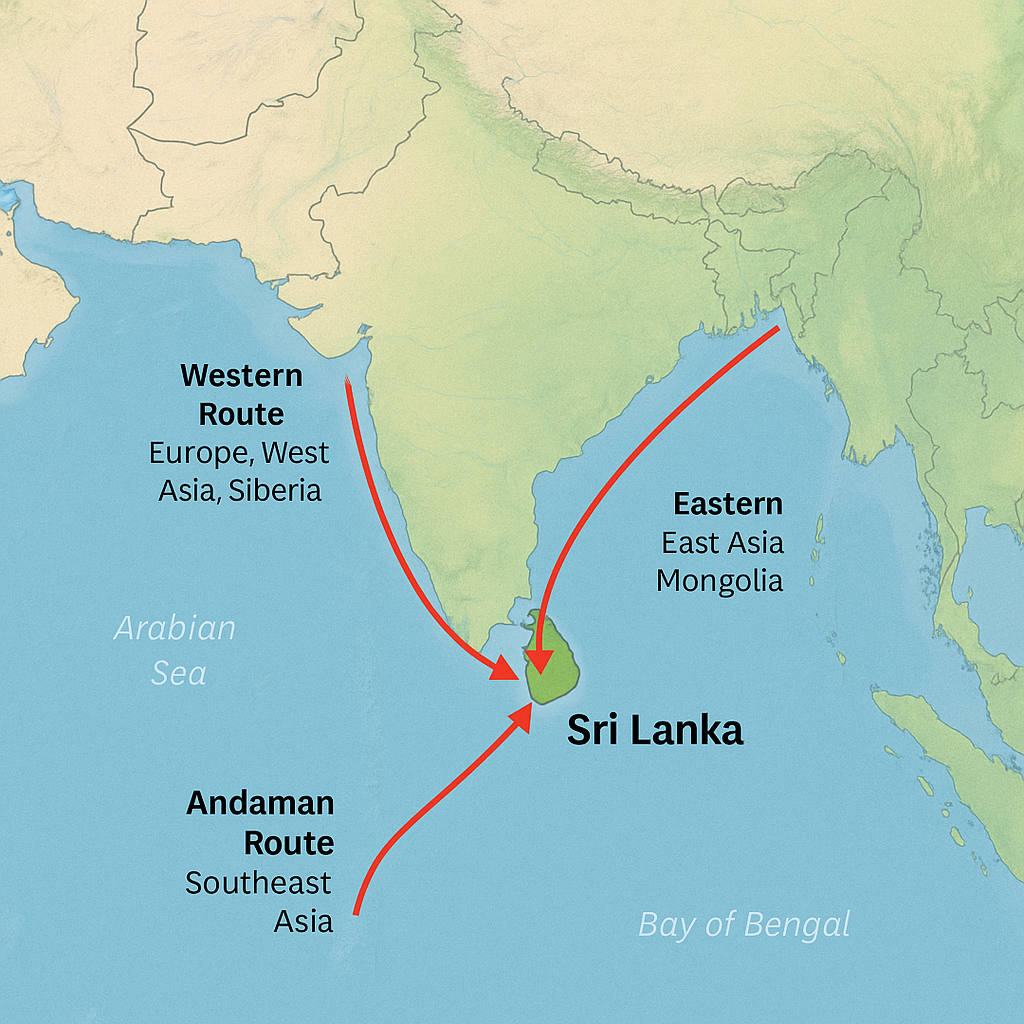
Inbound migration routes – Western, Eastern, and Andaman flyways converging on Sri Lanka.
Sri Lanka’s endemic list — expanded by researchers like Rasmussen and Wijesinghe — now includes 33 species.
Here are 10 of the most sought-after:
| Common Name | Scientific Name | Status |
|---|---|---|
| Sri Lanka Junglefowl | Gallus lafayetii | National Bird / Endemic |
| Sri Lanka Blue Magpie | Urocissa ornata | Endemic |
| Serendib Scops Owl | Otus thilohoffmanni | Endemic / Rare |
| Sri Lanka Whistling Thrush | Myophonus blighi | Endemic / Endangered |
| Sri Lanka Spurfowl | Galloperdix bicalcarata | Endemic |
| Yellow-eared Bulbul | Pycnonotus penicillatus | Endemic |
| Green-billed Coucal | Centropus chlororhynchos | Endemic / Vulnerable |
| Chestnut-backed Owlet | Glaucidium castanonotum | Endemic |
| Sri Lanka Wood Pigeon | Columba torringtoniae | Endemic / Vulnerable |
| Ashy-headed Laughingthrush | Garrulax cinereifrons | Endemic |
Full endemic checklist available on request – contact Laksky Travels for guided birding tours across Sri Lanka.
From mist-shrouded highlands to flamingo-filled lagoons, Sri Lanka offers a year-round theatre of wings — an unforgettable experience for birders of every kind.
As a Sri Lanka Tourism-licensed DMC with decades of expertise, Laksky Travels combines passion for wildlife with precision in logistics, ensuring every birding expedition is comfortable, ethical, and enriching.Ready to capture Sri Lanka’s vibrant birdlife?
Plan your bespoke birdwatching holiday with Laksky Travels → Contact Us

27
October
2025
Welcome to the Pearl of the Indian Ocean Planning your first trip to Sri Lanka? Discover how to spend one...
25
March
2018
The Sri Lankan capital is a large, sprawling city with a metro population of over 5 million people. I stayed...

13
July
2020
Sri Lanka is one of the most reliable surfing destinations in the Indian Ocean. Add to that the friendly locals,...
